The Tangra Project, New Delhi
Hospitality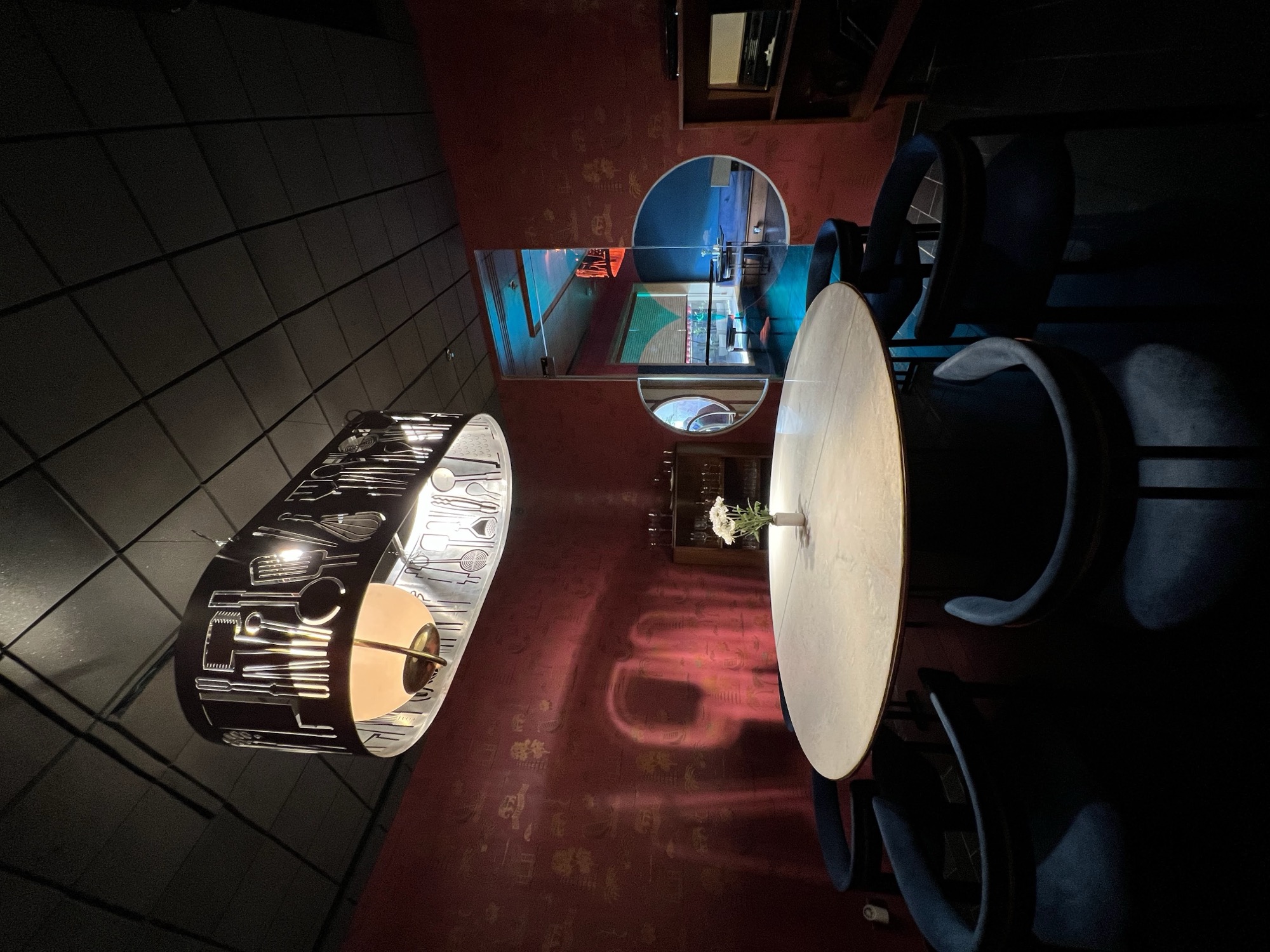
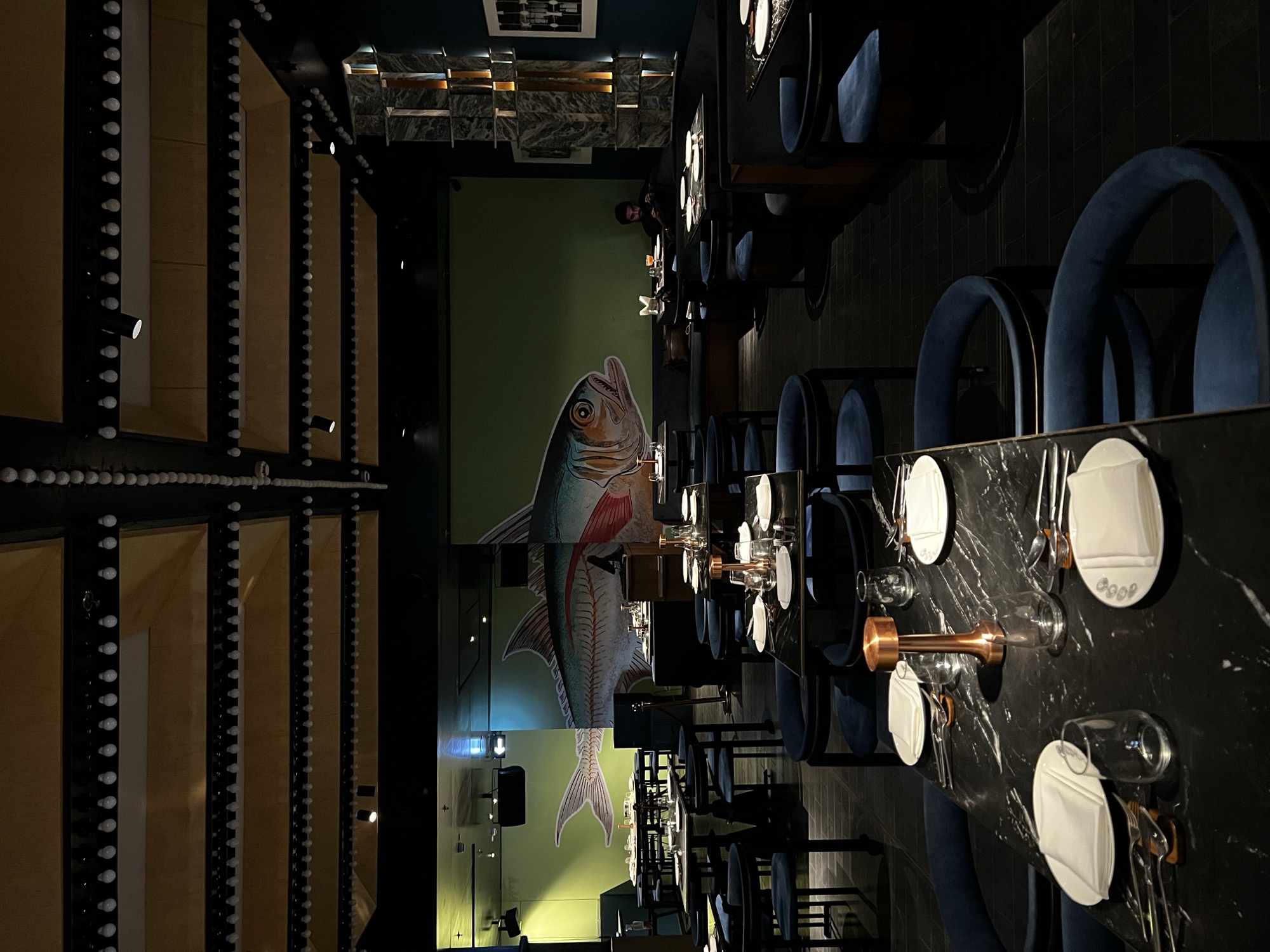
The physical space of “The Tangra Project” is the result of a series of conversations between chef Vikramjit’s kitchen, Vir Kotak, and the architects- Studio pomegranate. Not playing safe was always a given. The restaurant space had to be a stage that changes character throughout the day; both, the kitchen, and the restaurant space start their journey together in Tangra, and are poised to evolve, and transform over time.
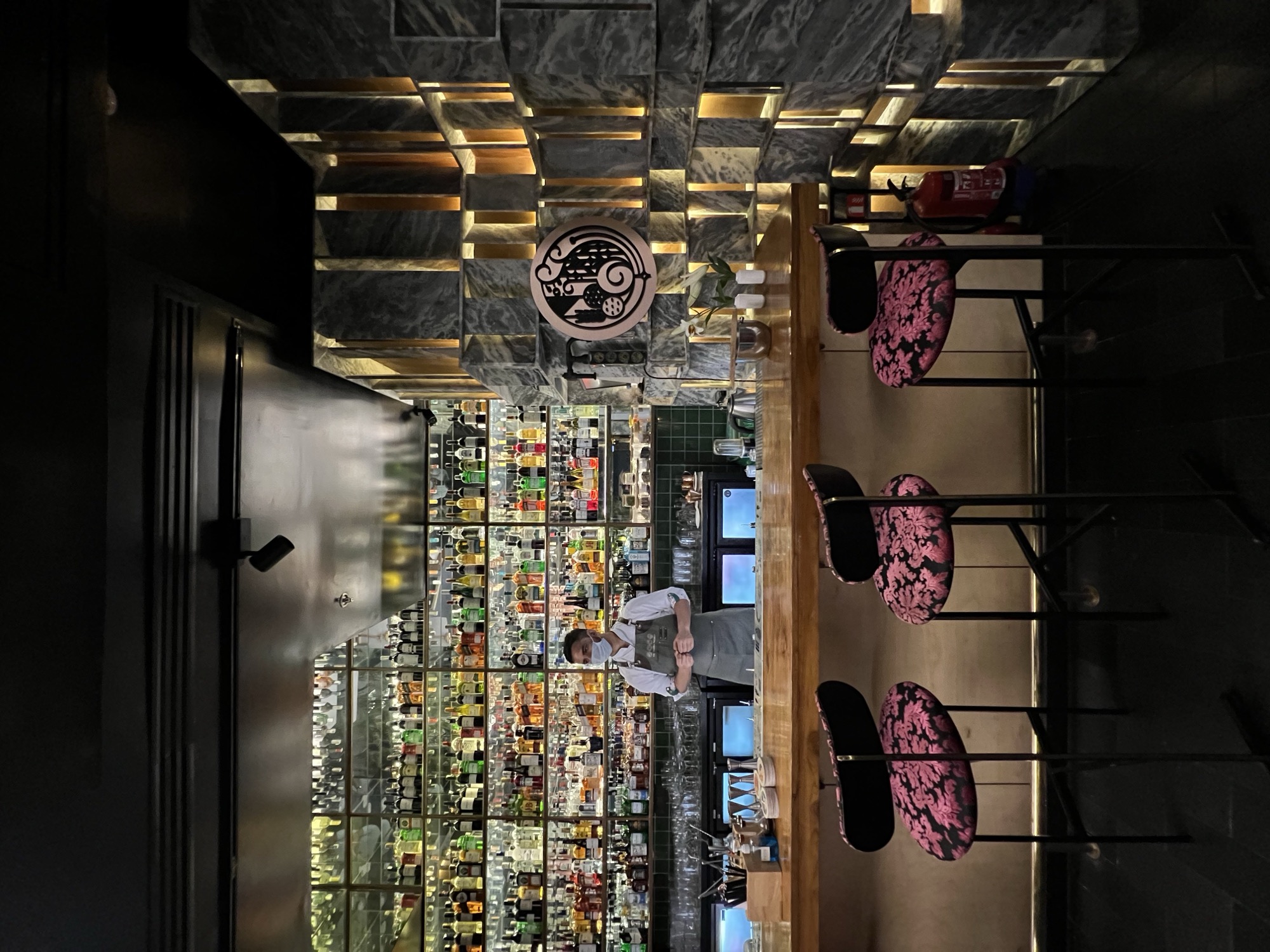
Chef Roy, Vir, and the studio believe that despite being in a mall, this project can deliver an experience of nostalgia, emotion, imperfection and its relationship with the present moment. This would be achieved through precise space planning, and an aesthetic of commonplace materials, used uncommonly. The space flows loftily around a kitchen that bares its workings, the floors are reminiscent of the streets of Tangra, uneven columns built with basic marble talk through their play of light and shadow, while lending an air of being watched, and Vir produced a series of cerebral images that bring the physical, emotional, and metaphorical into the space.
Long version
Vir Kotak, Vikramjit Roy, Anurodh Samal, and Studio pomegranate have a feeling of history between each other; despite meeting for the first time only in 2021. Perhaps the machinations of COVID-19 brought out the best in us all. This year also brought Vir to connect Chef, and the Studio to start a new project in Delhi’s DLF Avenue mall, at Saket.
The space to be conceived was a 3100 Sq.ft corner space in “The commons,” a curated food space within the shopping district. The studio views this project as one that brings forth the emotion of a meal into the physical space. The process of understanding this concept started at the table of Chef Roy in an undisclosed location where we were served many courses of food that pummelled the senses. The experience begins while one walks down a busy village street in Delhi with glimmering LED1 lights, courtyard homes, street food aromas, and the din of Autorickshaws, all while being watched by eyes just as curious as ours. Once in the space, an intimate circular table, and an impeccable kitchen are only setting the stage for the meal to come. In the meal- Chef Roy explored the neuroscience of food in ways that are far from the experiences we have in restaurants today, and we understood that to convey the same, one would have to tap into emotion, nostalgia, and curiosity to create a space that is a stage for this type of experience. The culinary experience of a diner at The Tangra project is a distilled version of this journey.
The studio’s interpretation of the experience presented by Chef Roy brought up several parallels with Jun'ichirō Tanizaki’s seminal book “In Praise of Shadows,” as the food served at the Tangra project reference the lives of our ancestors- who lived beautiful lives despite being forced to live frugally, were magnanimous, and generous with their children, guests, and anyone who visited home. Hence it was the shadows that defined the light, and the Tangra project aspires to be “In praise of shadows,” of hospitality that is generous, and offers a part of itself to each guest at the restaurant. This concept trickled down into the way the restaurant was formulated, and defined the physical aspects that one sees in its walls, floor, and ceiling.
There are two ways one could enter The Tangra project- through a street-side entrance, where one is greeted by a door that references “moon doors” of south east Asia, and a central aspect of the chinese built environment. This entrance is a threshold that sets the mood to a Private Dining space, and Chef’s table which has now grown and become a refined version of the one described earlier. If one uses this entrance, it is to come exclusively to the restaurant, and is greeted with ante-rooms, closets, art, and finally the kitchen which is the central aspect of the space.
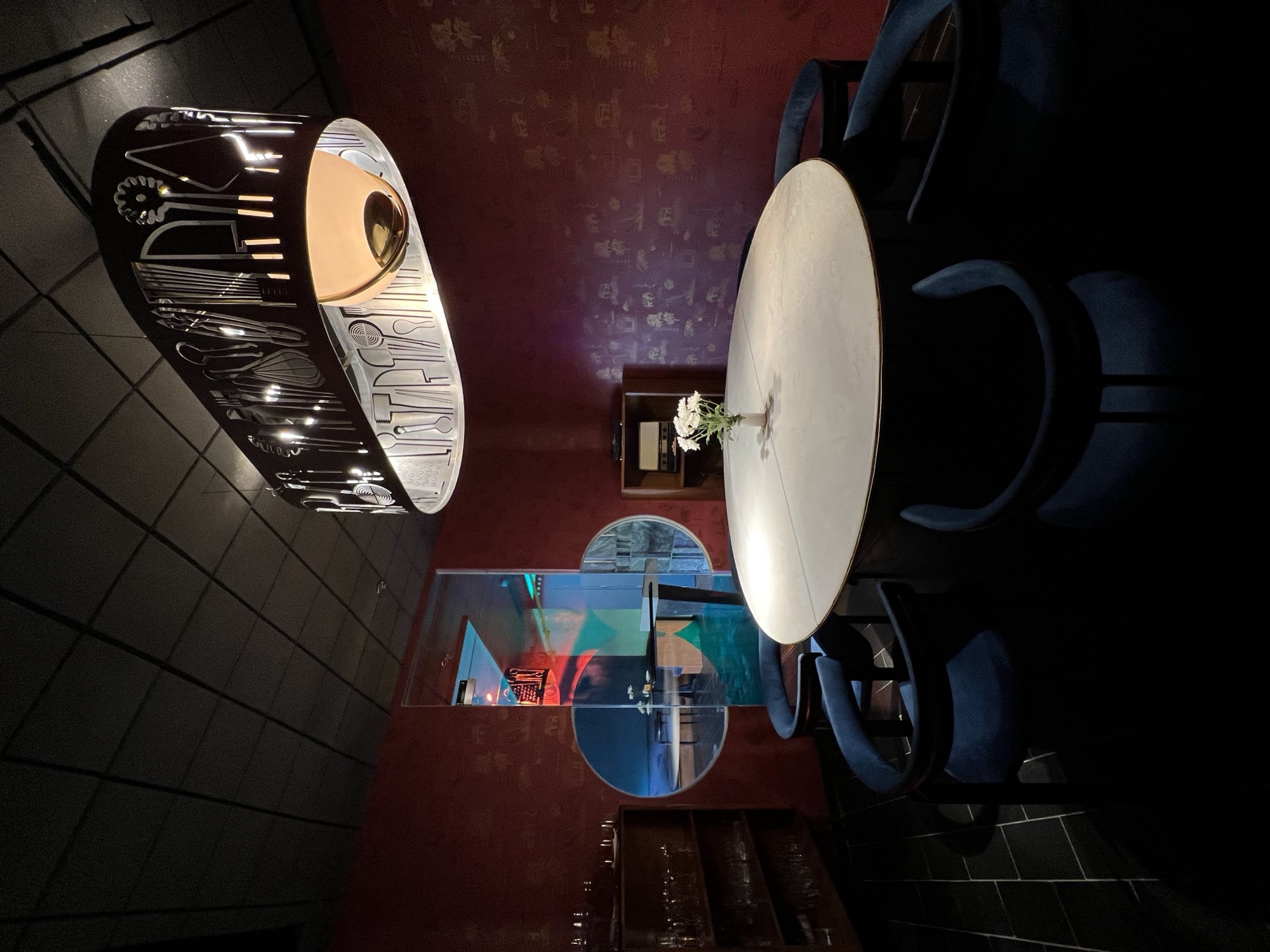
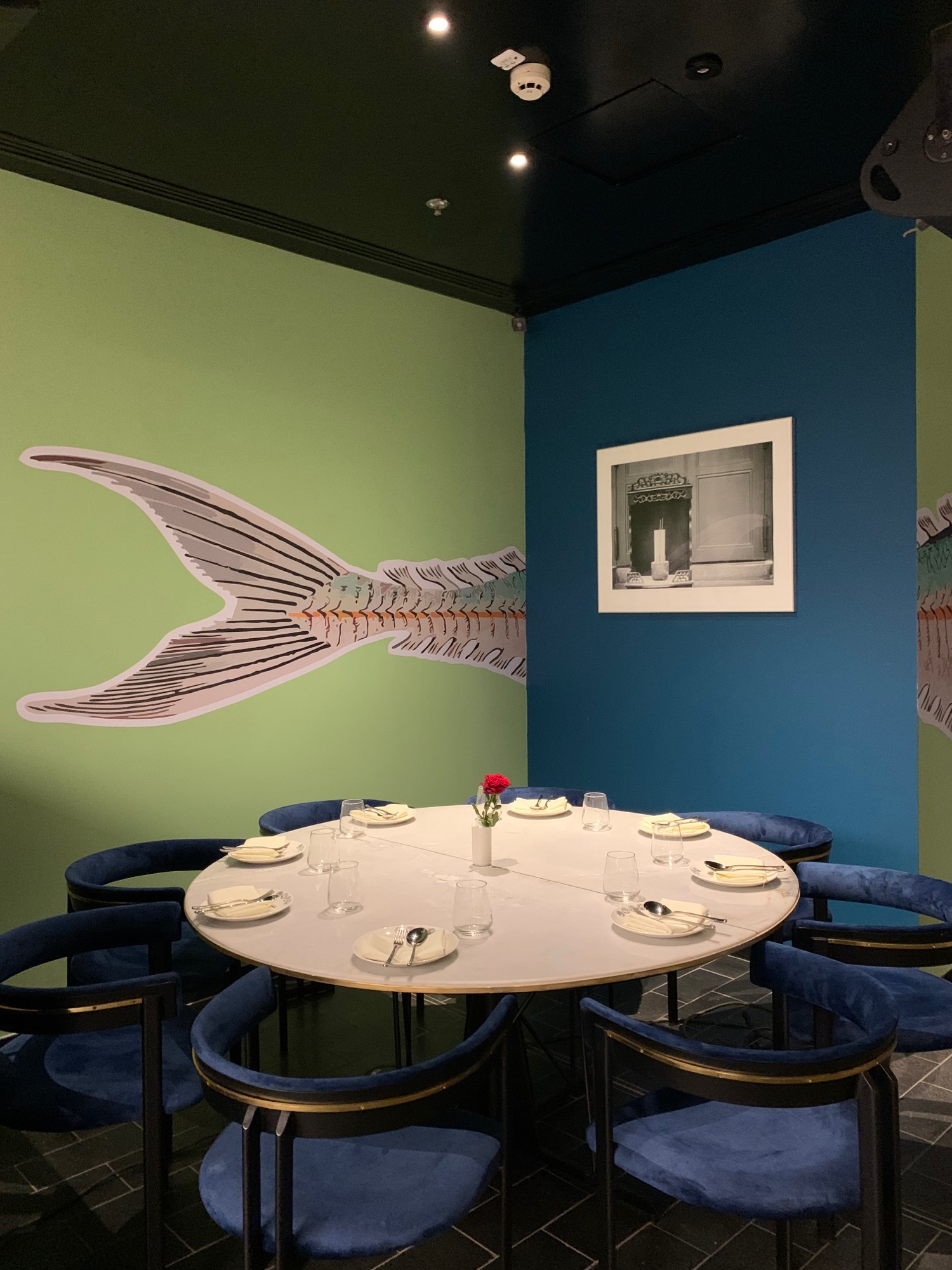
The Private Dining room is a nearly-square room that is a very different space- with red wallpaper with images of the confluence of India and China, a circular marble table, and a custom built chandelier designed by Studio Pomegranate. The chandelier is made with the silhouettes of kitchen tools, that pop in and out of plane, while bouncing light around playfully. This brings in the kitchen into the only space in the restaurant that does not have a view of the actual kitchen.
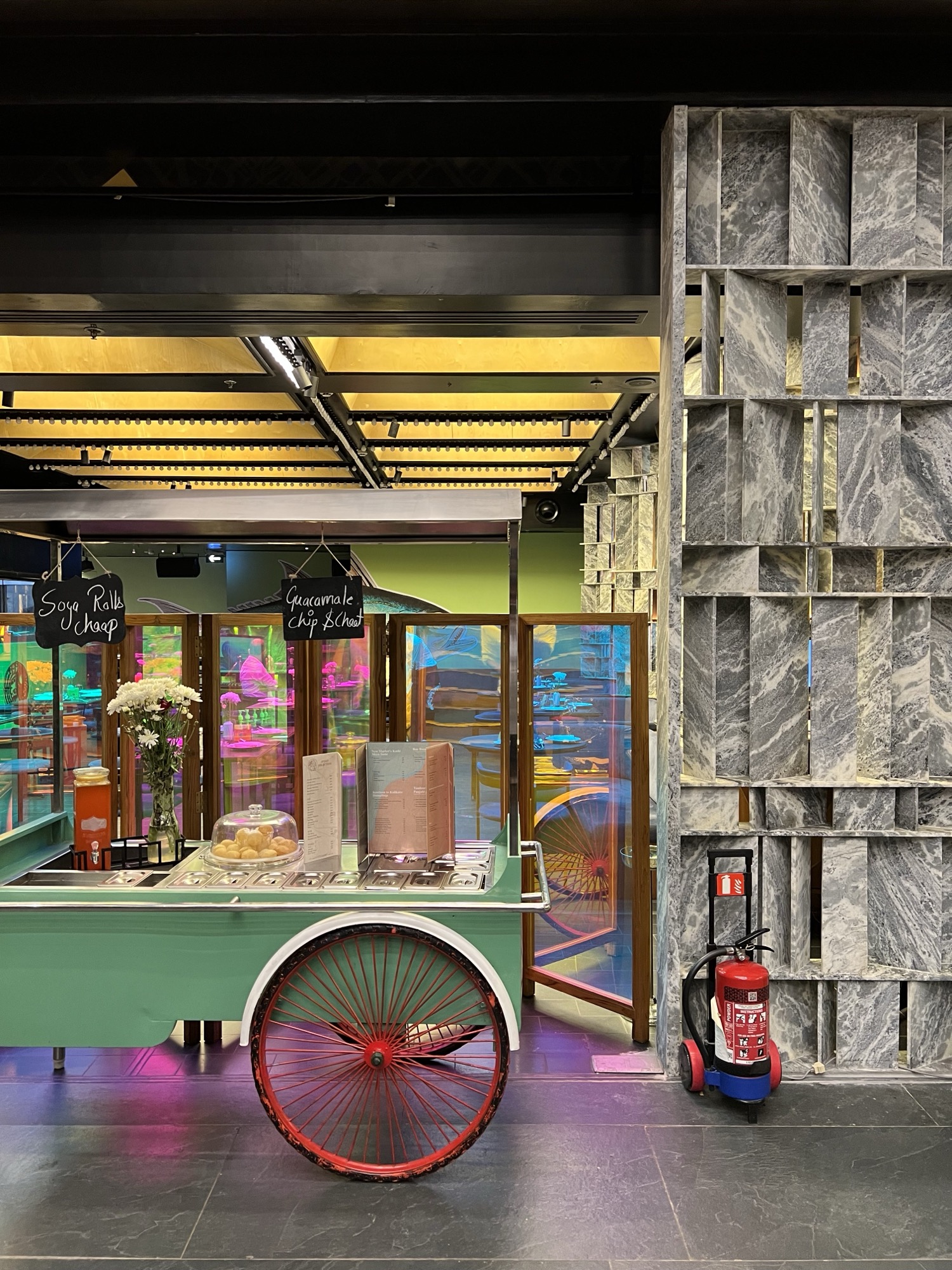
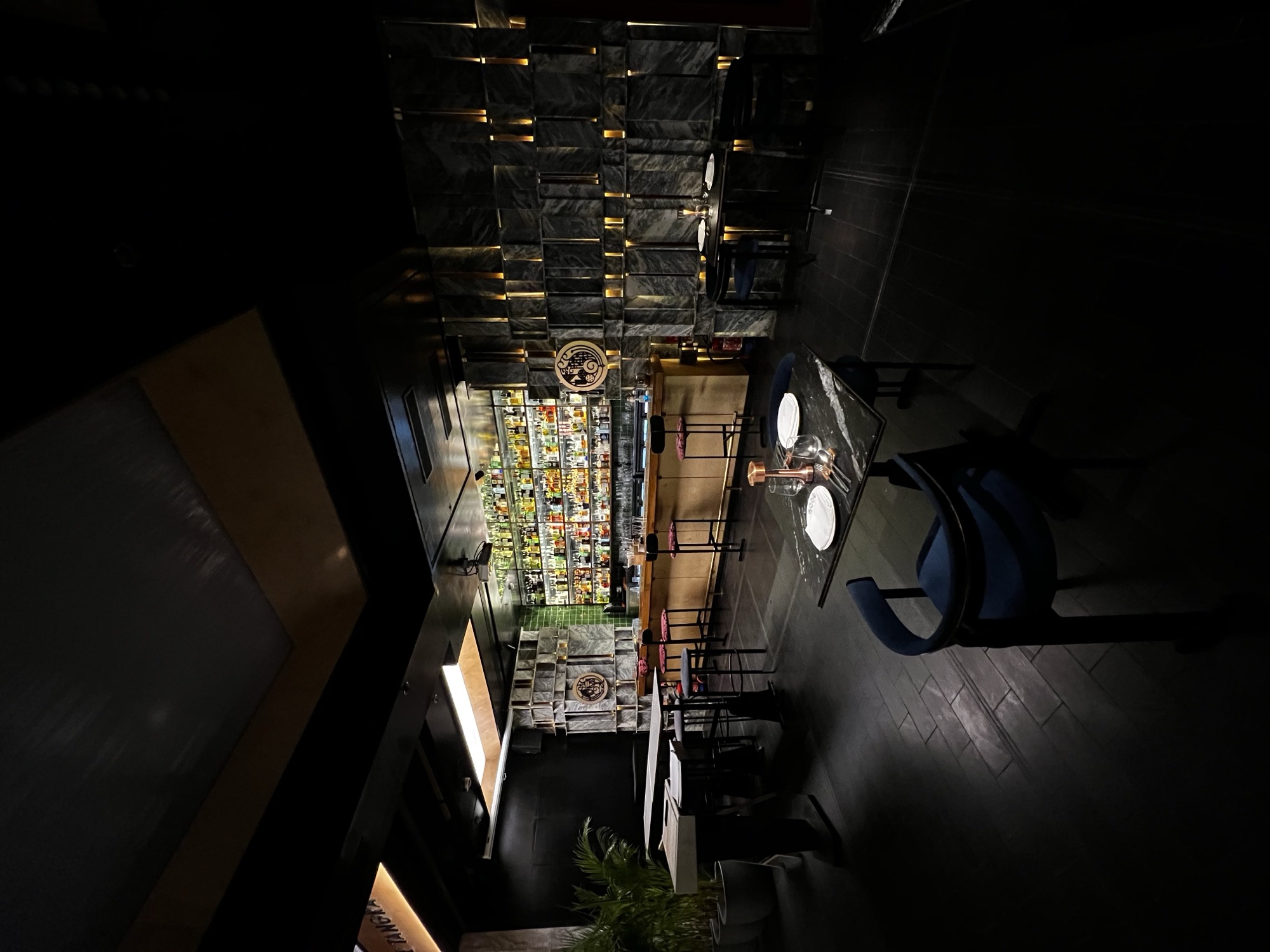
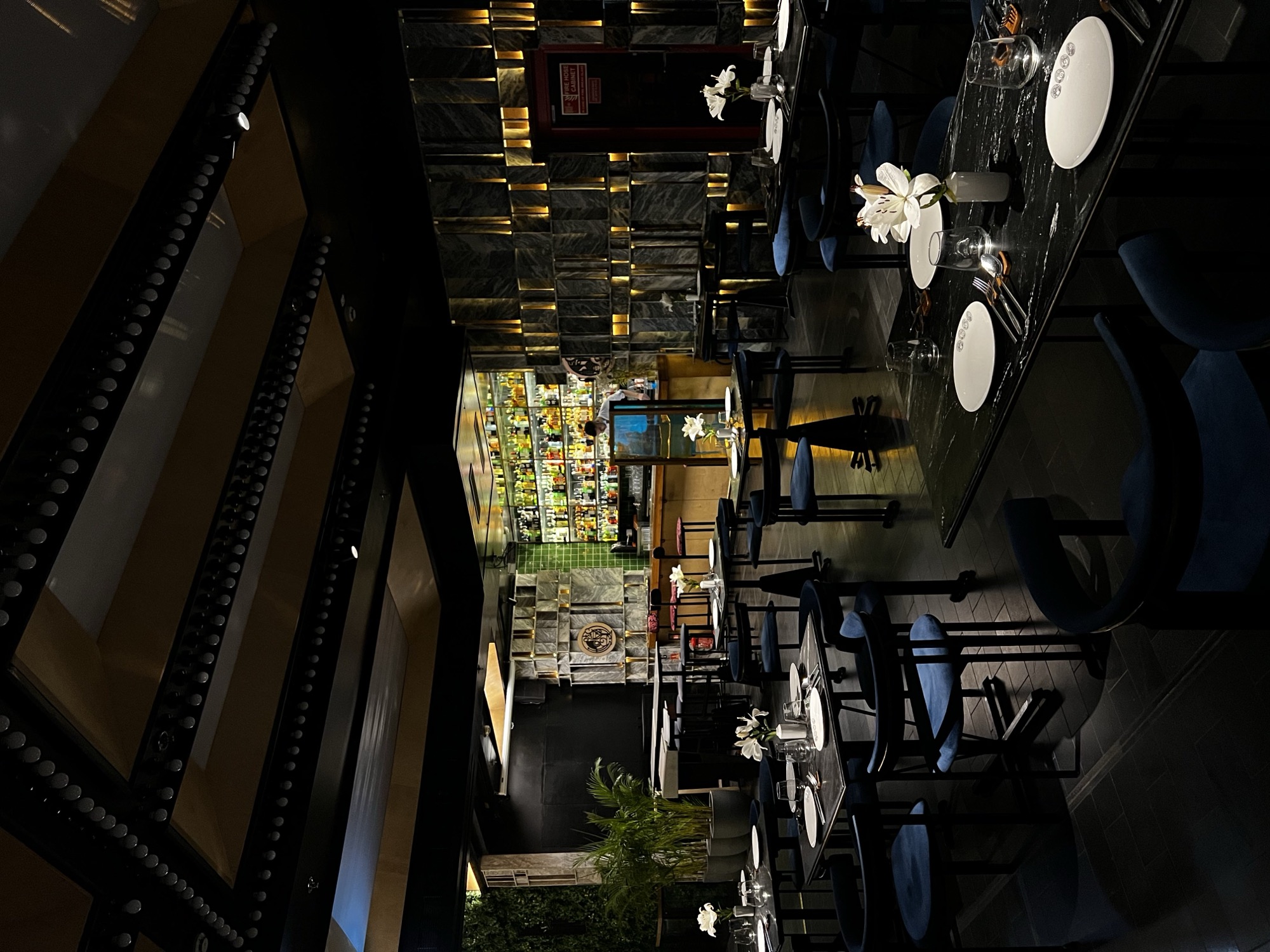
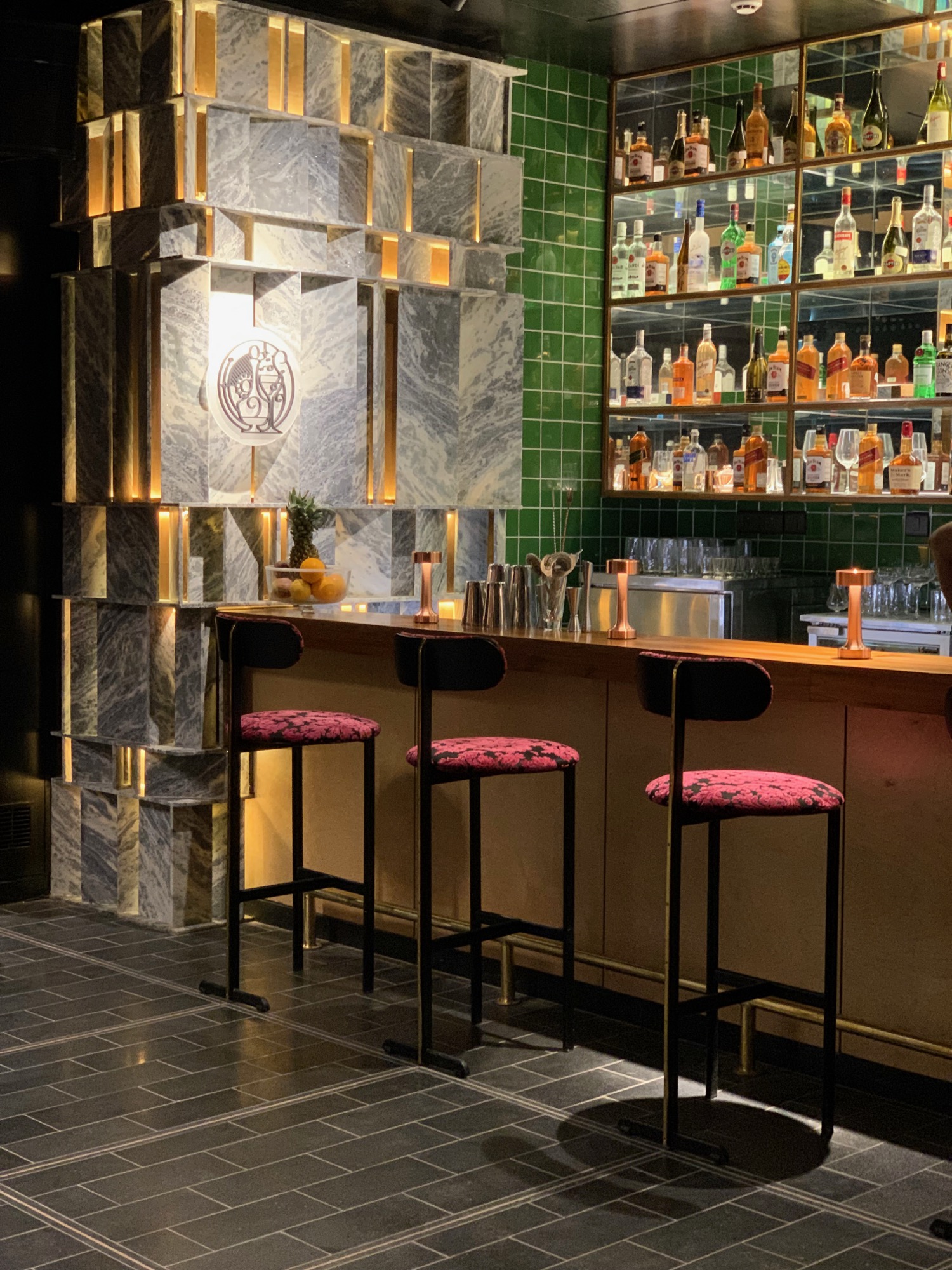
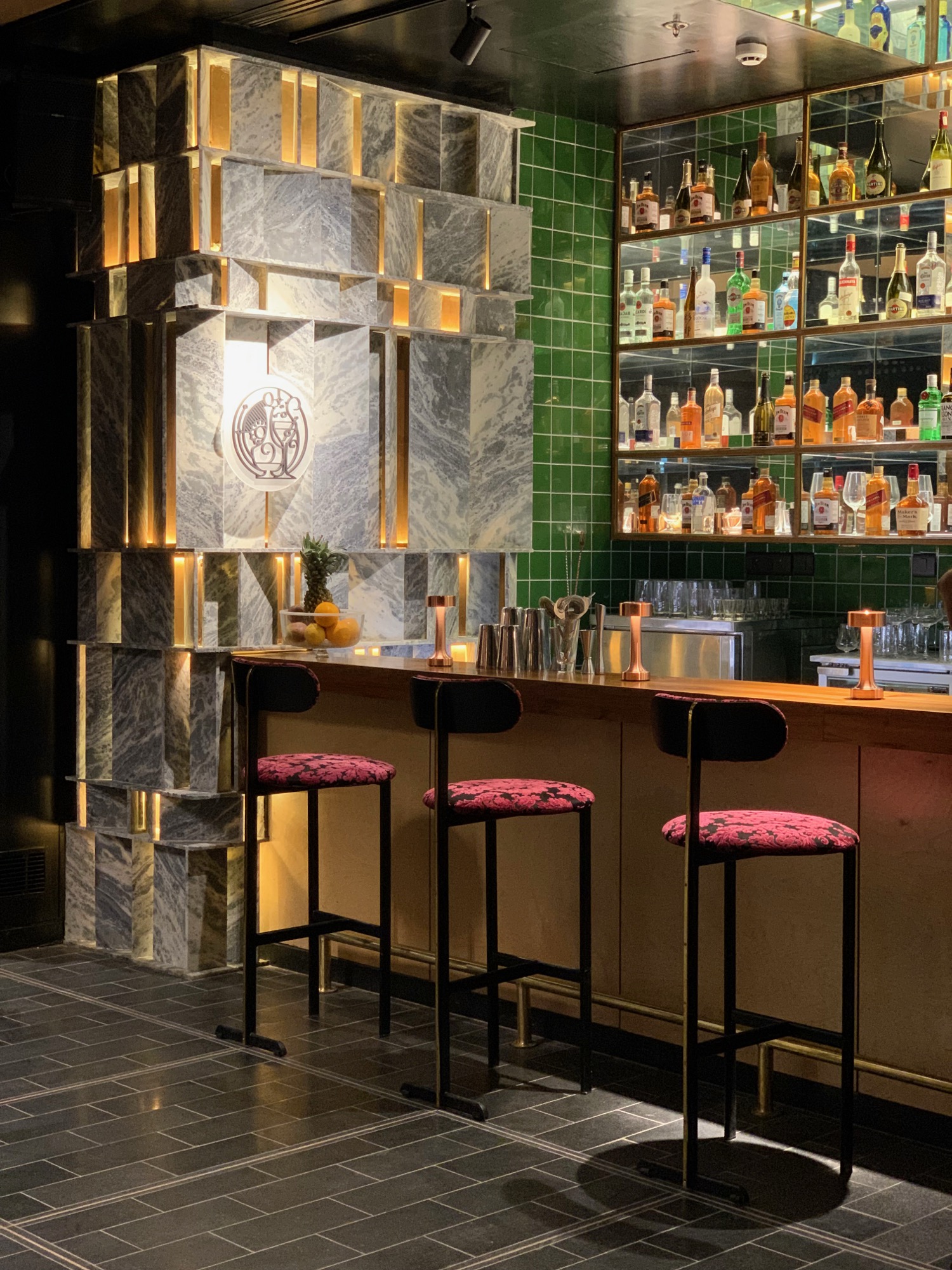
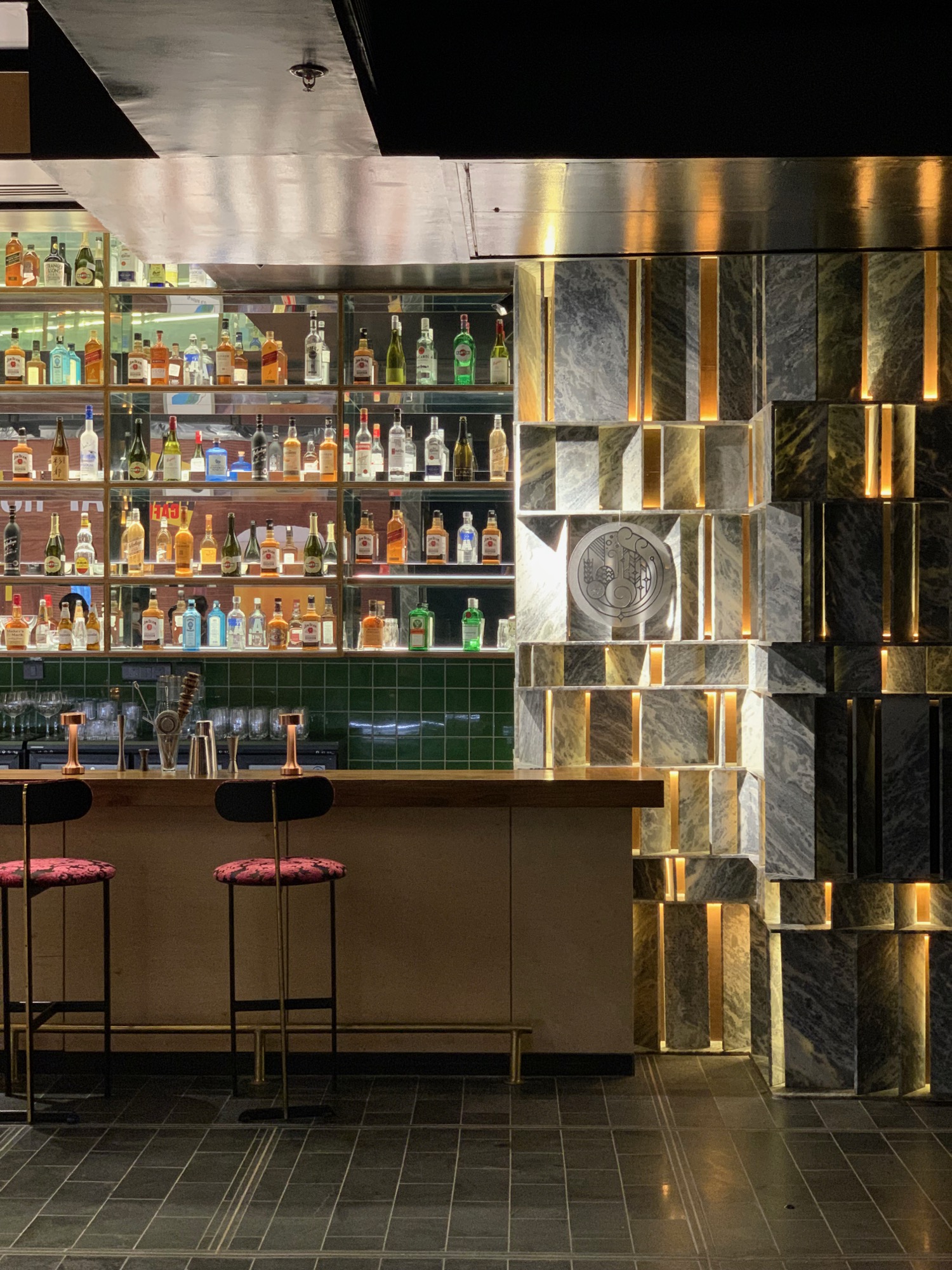
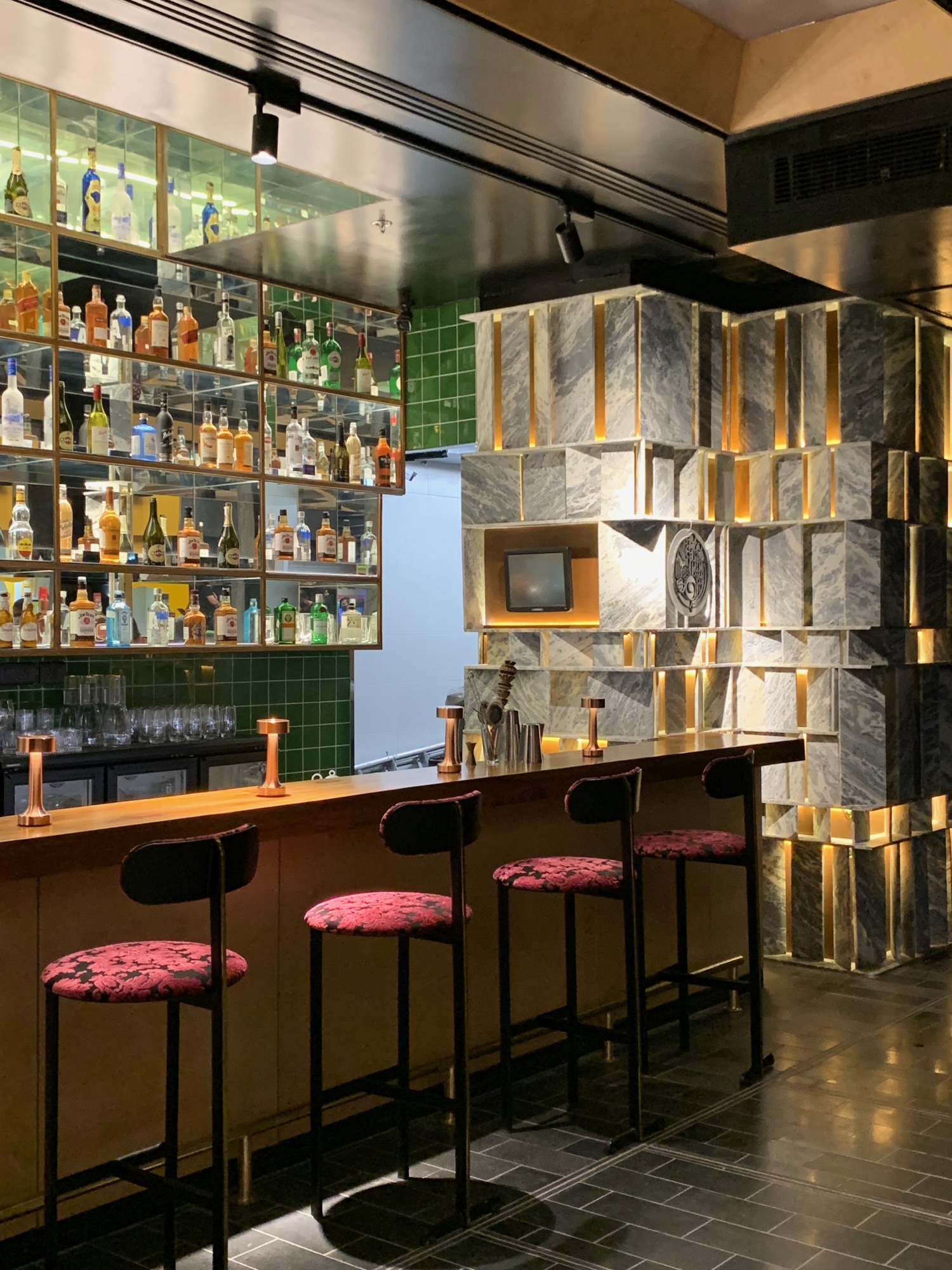
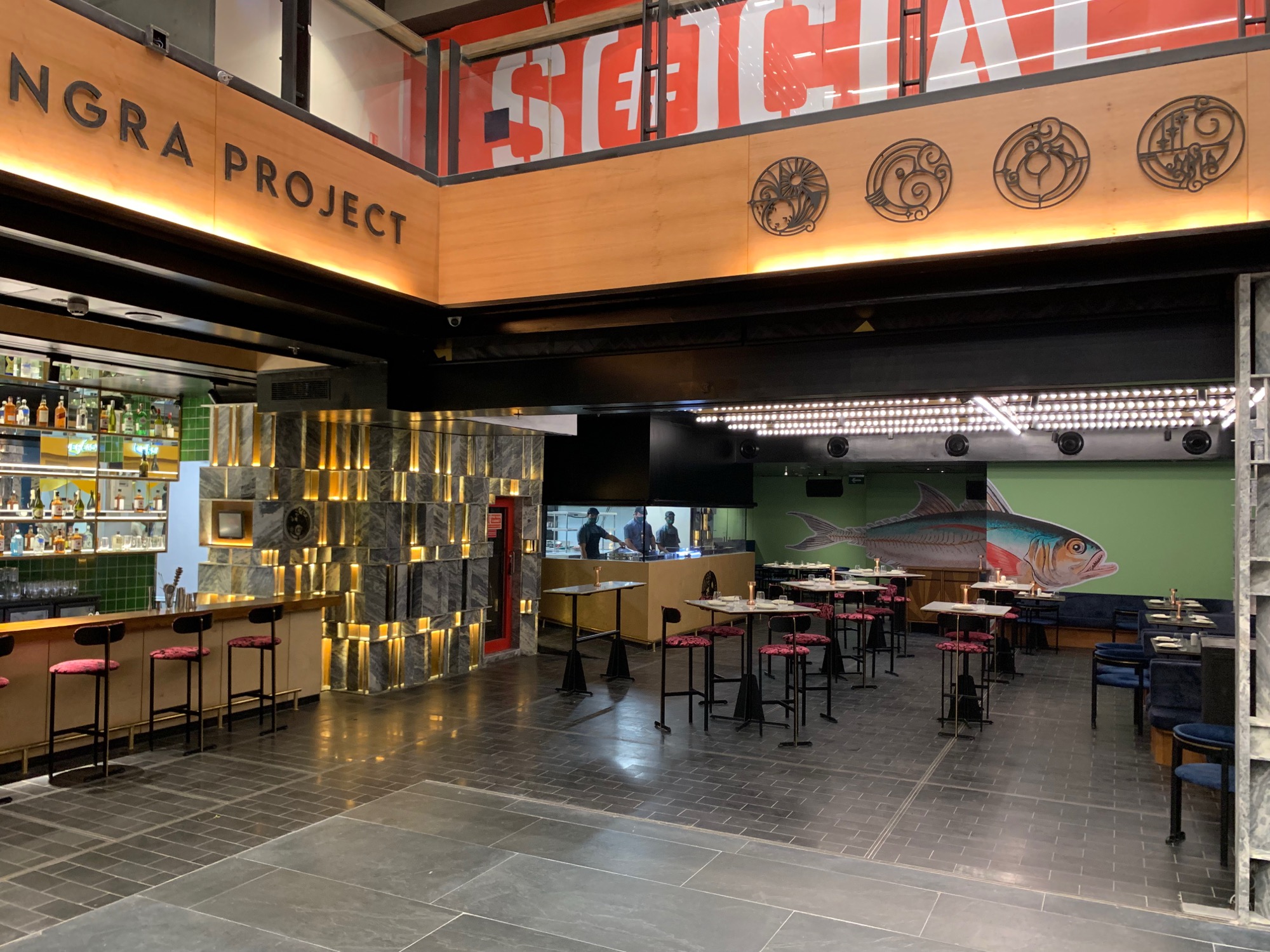
The other entrance is from the mall side, and is completely open with nothing keeping one away. A bar to the left is placed shallow, and brings one in. It is reminiscent of Calcutta’s book sellers who are often completely packed with books, yet find the space for a reader to sit and read right there if they please. This entrance brings one in without announcing their entry, and blurs the edges of its space. The art on the walls here depicts a different story, and the space unfolds differently from the street-side entrance.
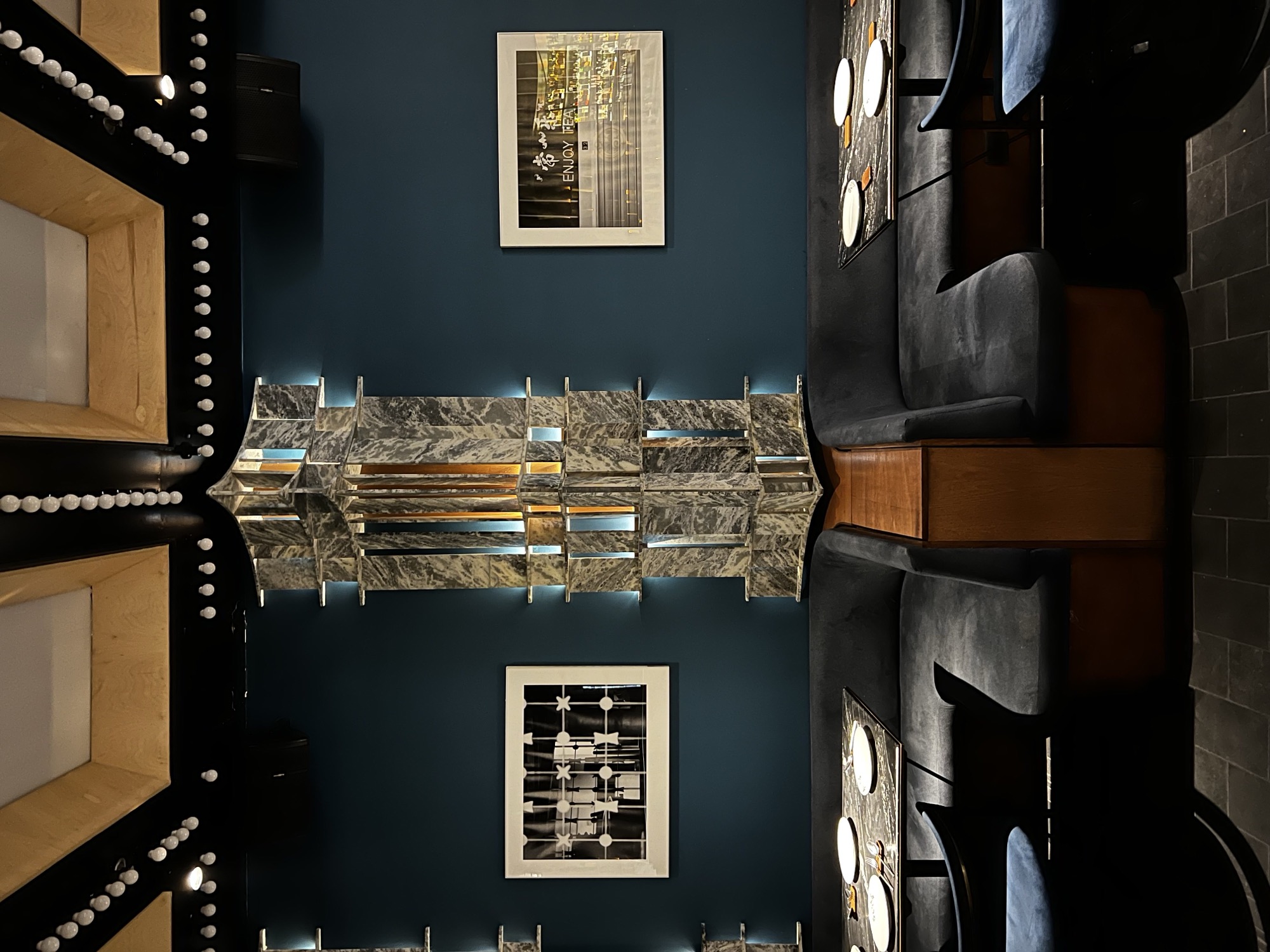
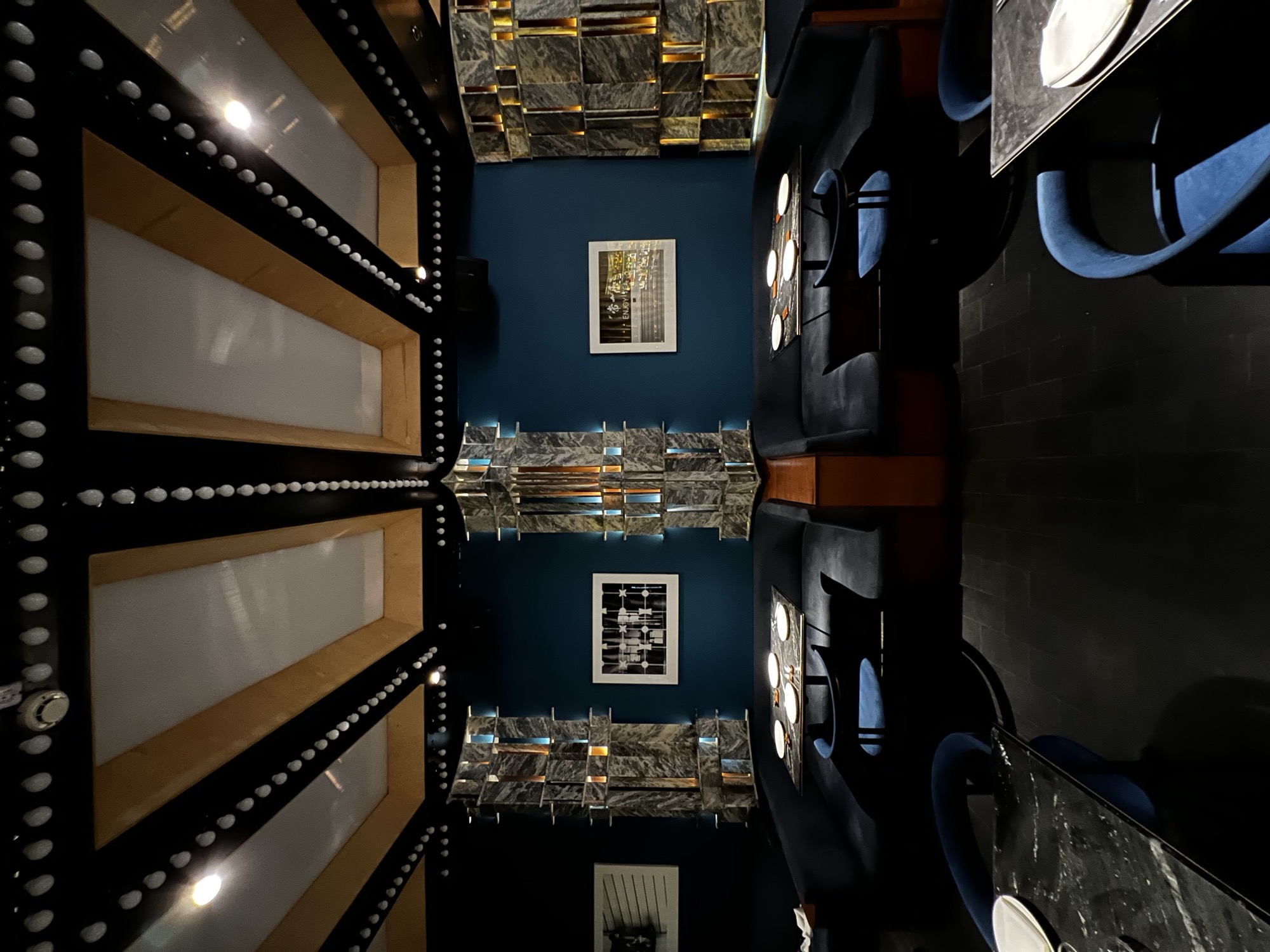
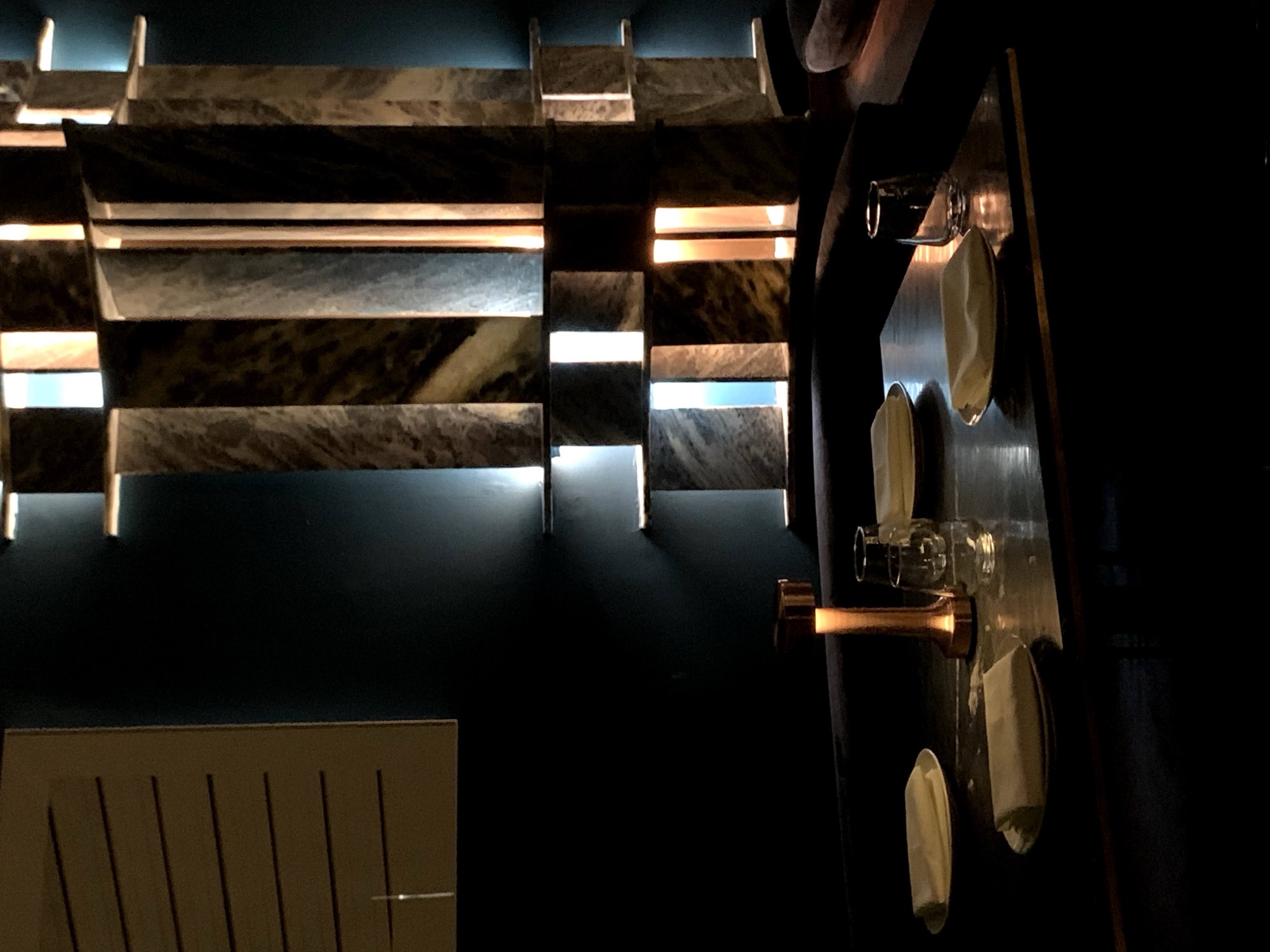
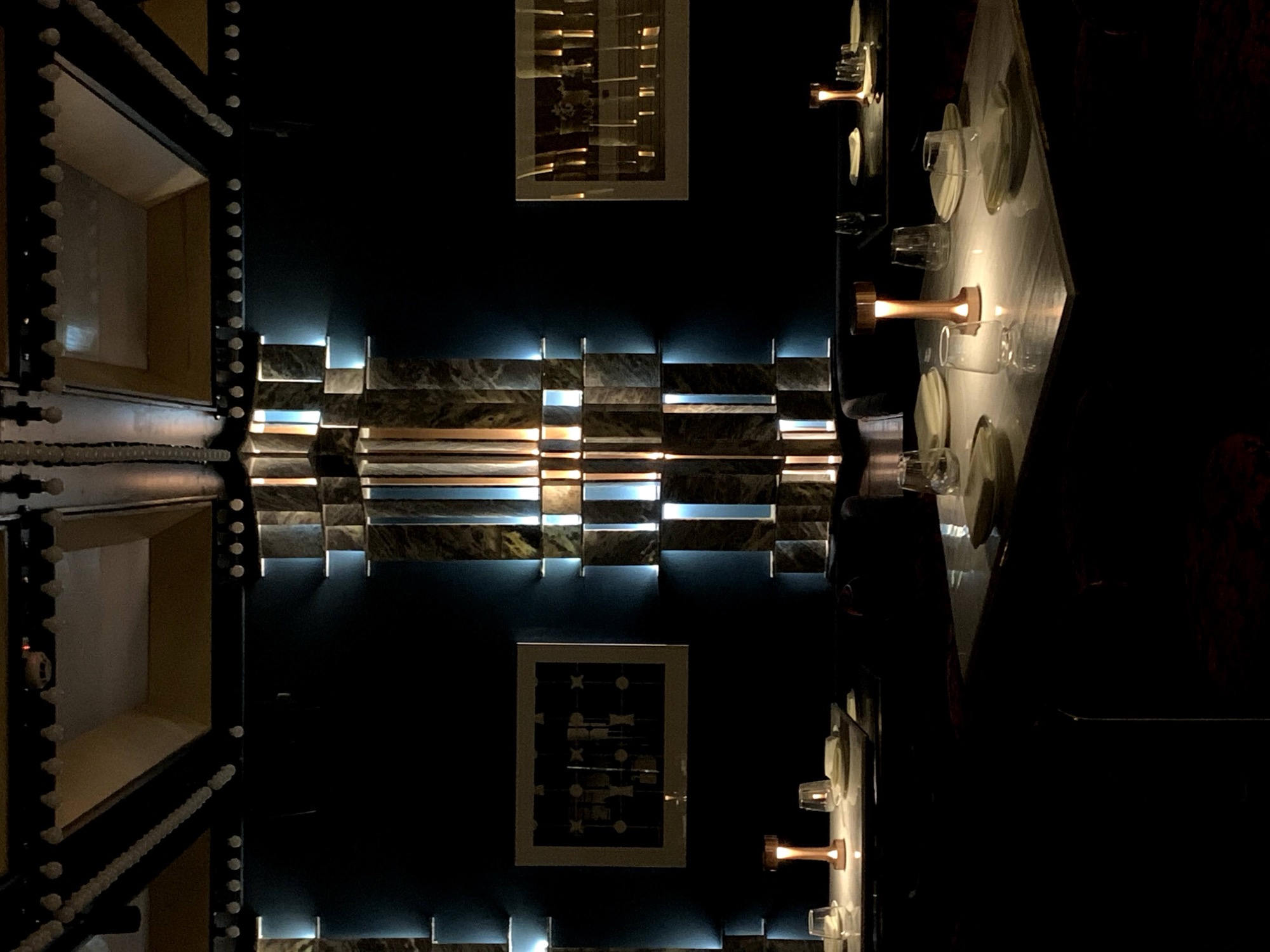
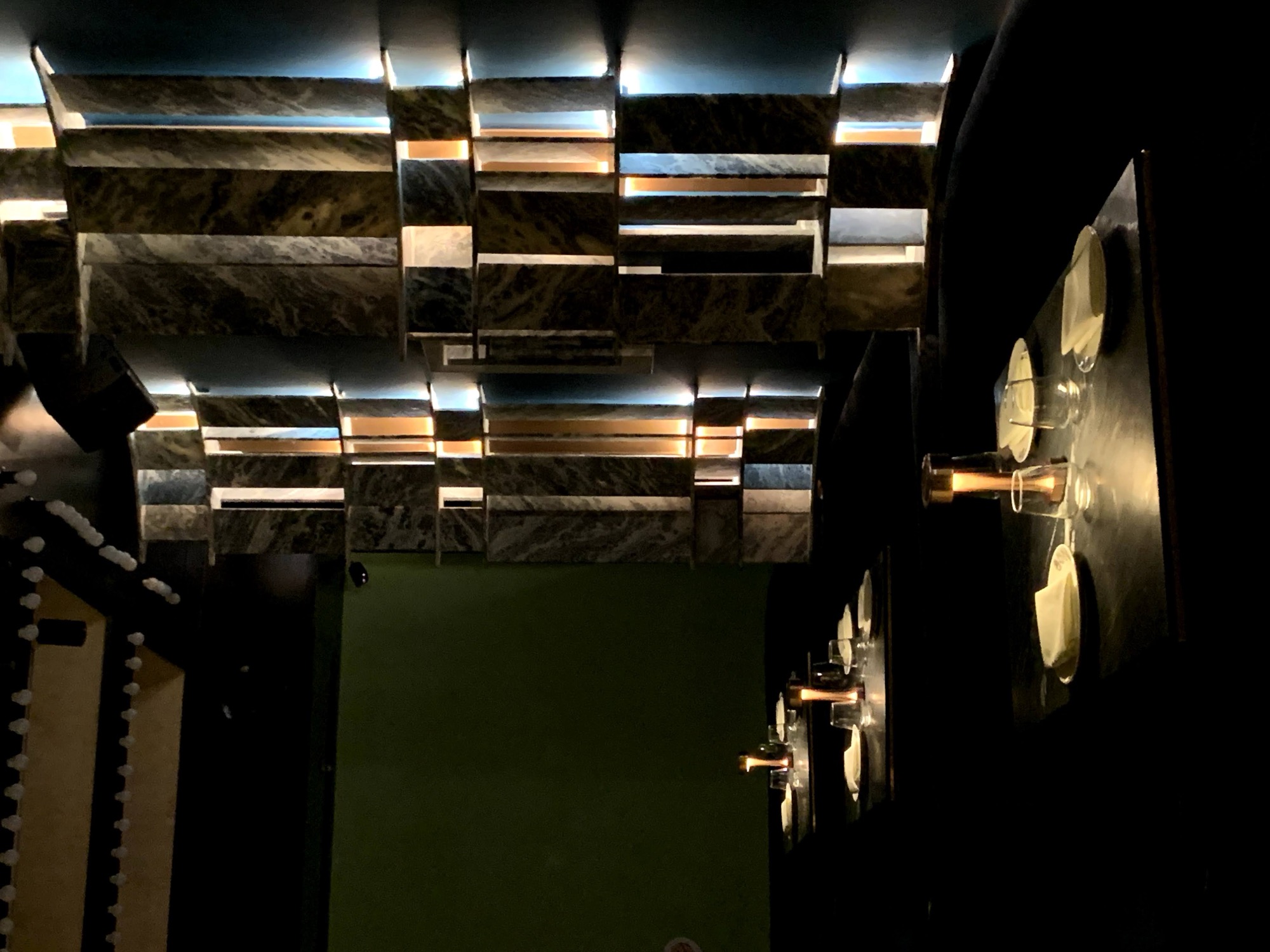
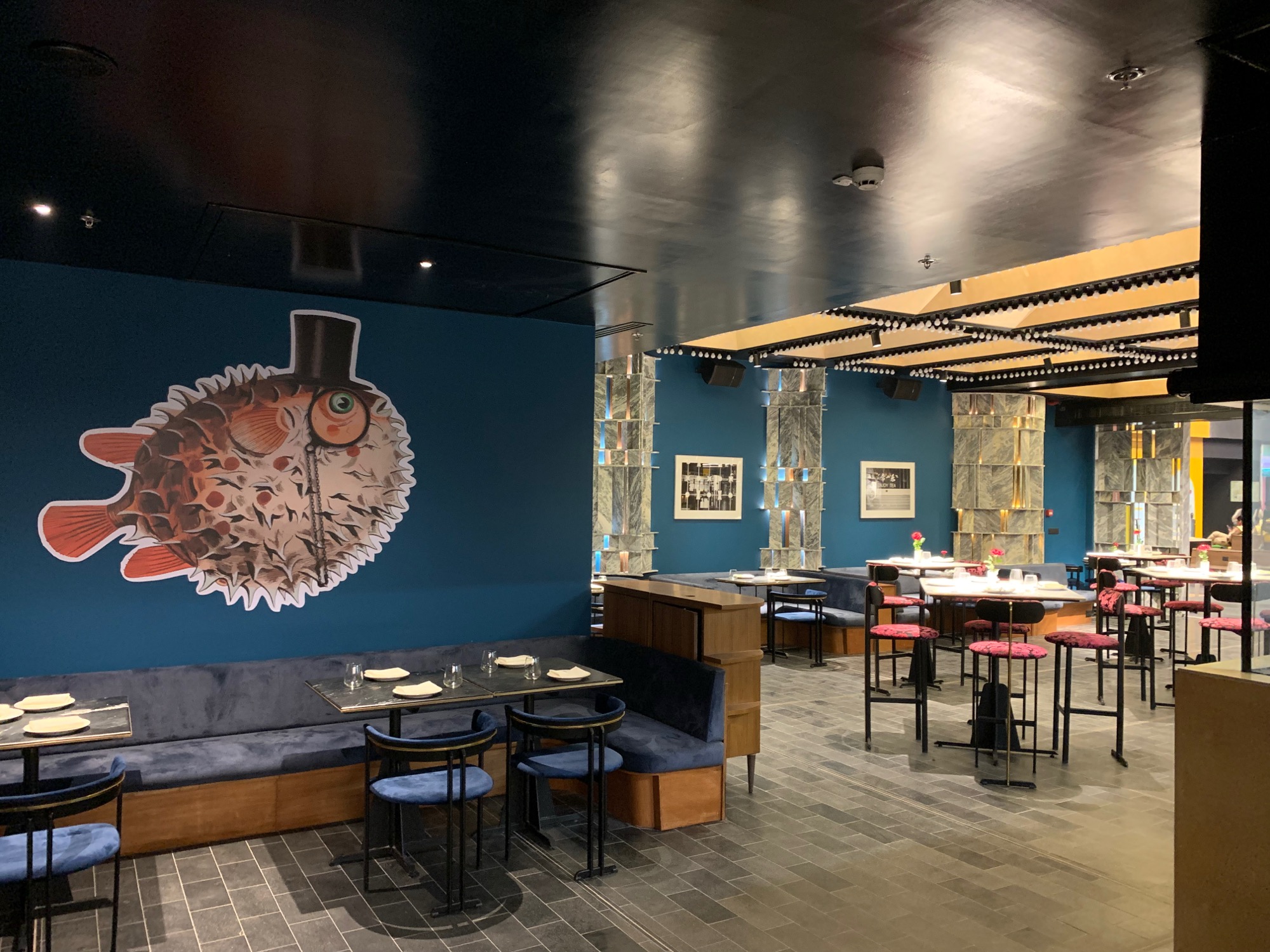
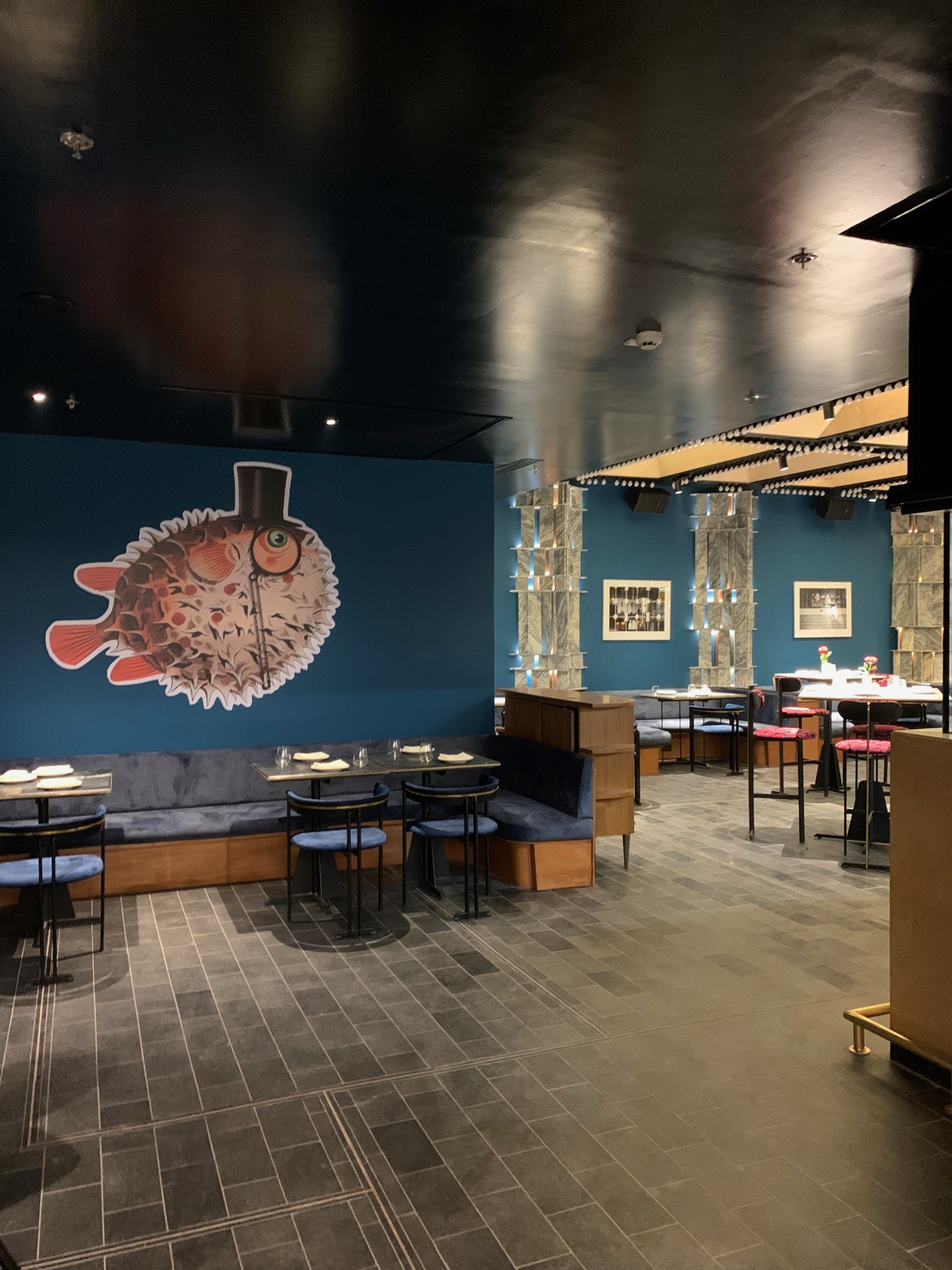
Once inside, the viewer is surrounded by several column-like structures built with marble, and lit from within to glow like lanterns. These form the walls, and open up to allow doors, windows, a bar, and make space for the kitchen around which both entry sequences, and all the space in the restaurant flows. The simplest, and cheapest Indian marble has been used to build these columns, as unlike traditional building materials that reflect light, marble has a quality that seems to absorb it, to envelop it gently like a block of sugar, or salt. Its edges are uncertain, and is slightly rough, and random. These marble blocks are built to remind you of city windows that look out onto busy streets. Where there are connections between the street, and an onlooker in the shadows behind the window. Through the day the lights within these columns changes colour from cool to turned off, to warm, revealing it’s many structures, just like a city does.
The floor is made with small flagstones of black granite with lines that run through the space, bringing one to their table, and also into the kitchen, and other spaces, as well as creating a coding system for tables to be aligned, and laid out at the start of the day. The bar top is made of a block of natural solid teak wood- which will darken, and the grain will grow more subtle with age.
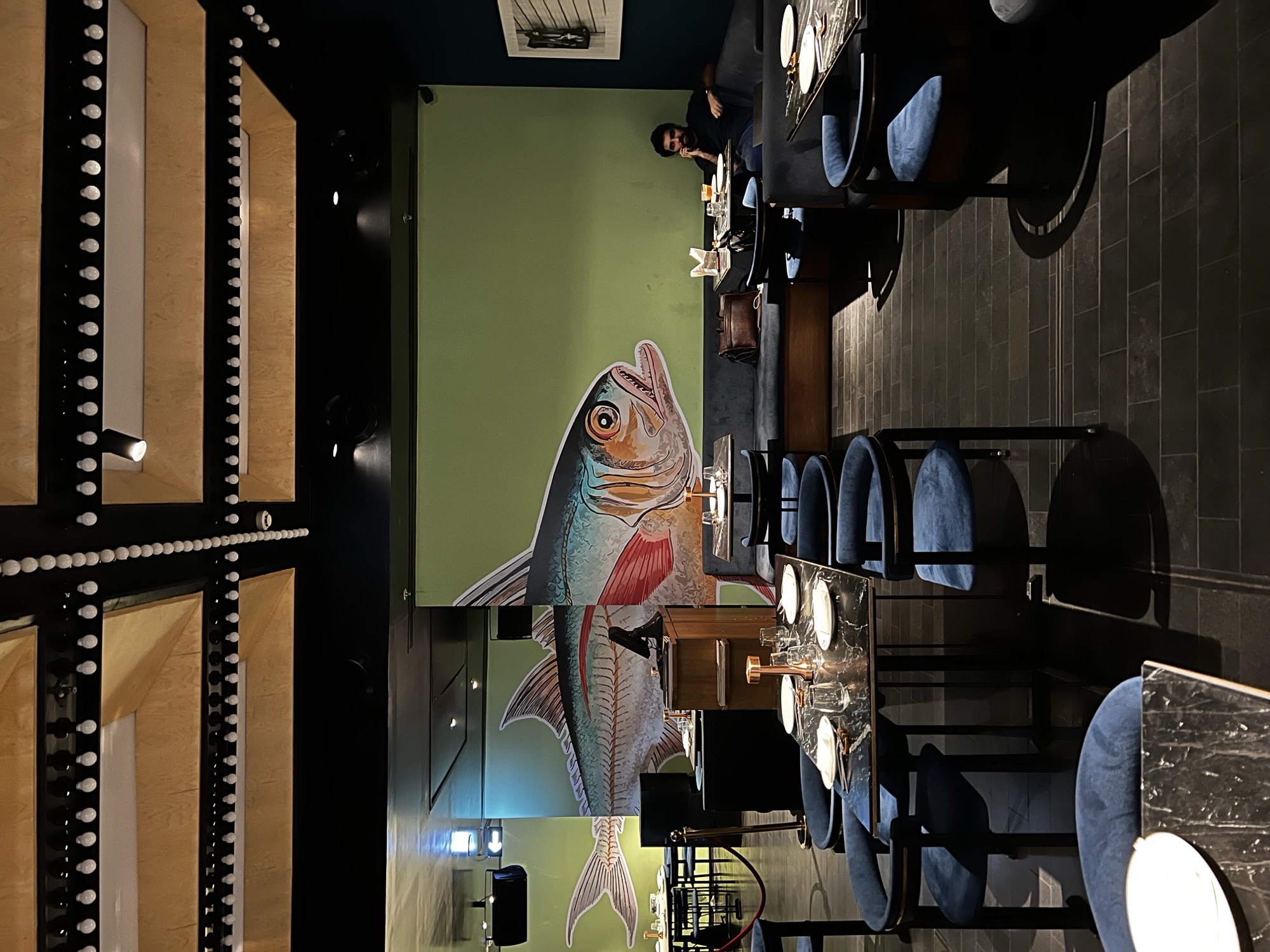
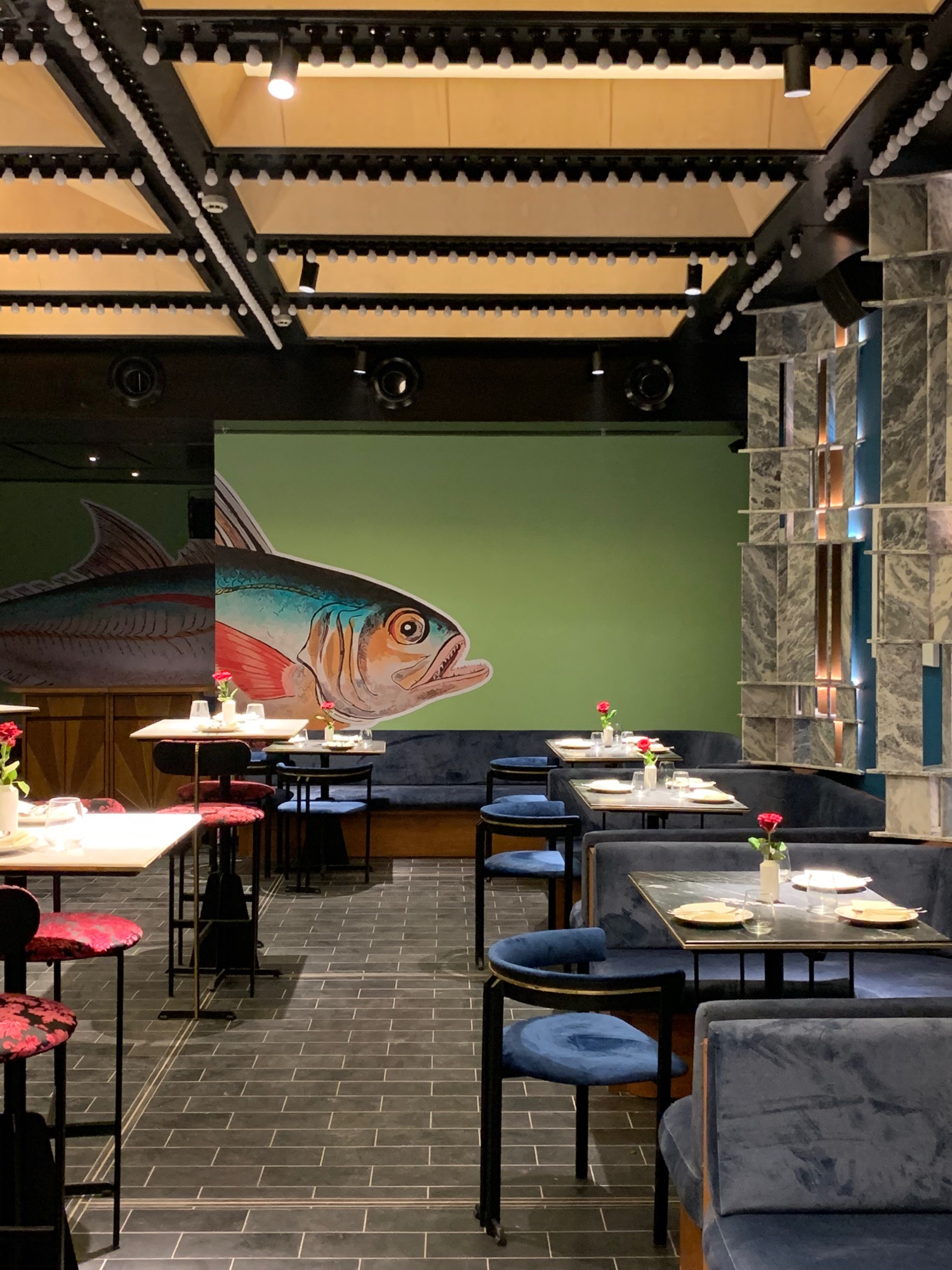
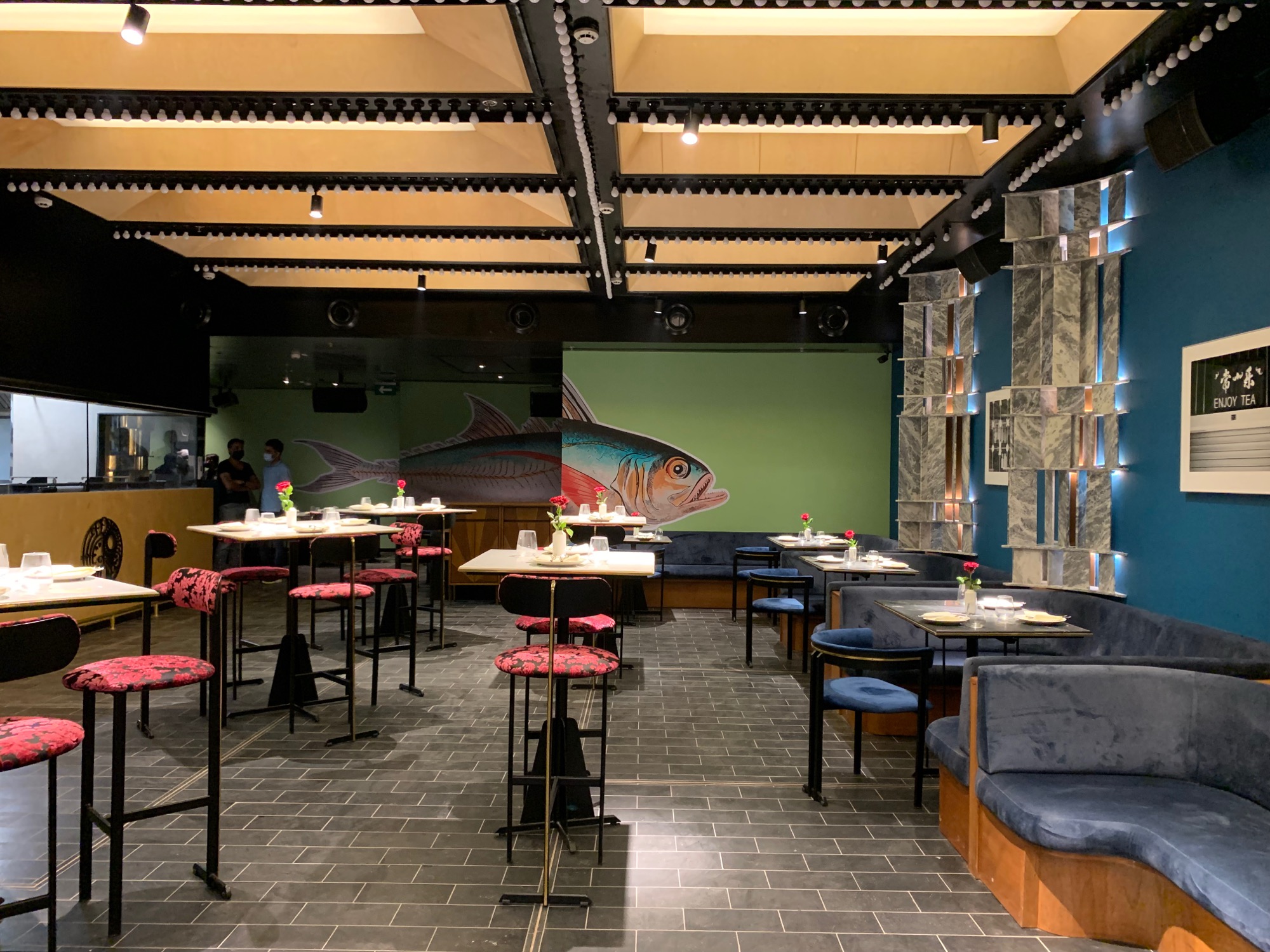
The ceiling is made with coffered light plywood, and lit from within. These lights change several times through the day to bring forth the mood of the diner- ranging from a bright sun-lit room, to a beautiful monsoon evening, and finally a thumping night atmosphere with the shining city lights, and table lamps for company.
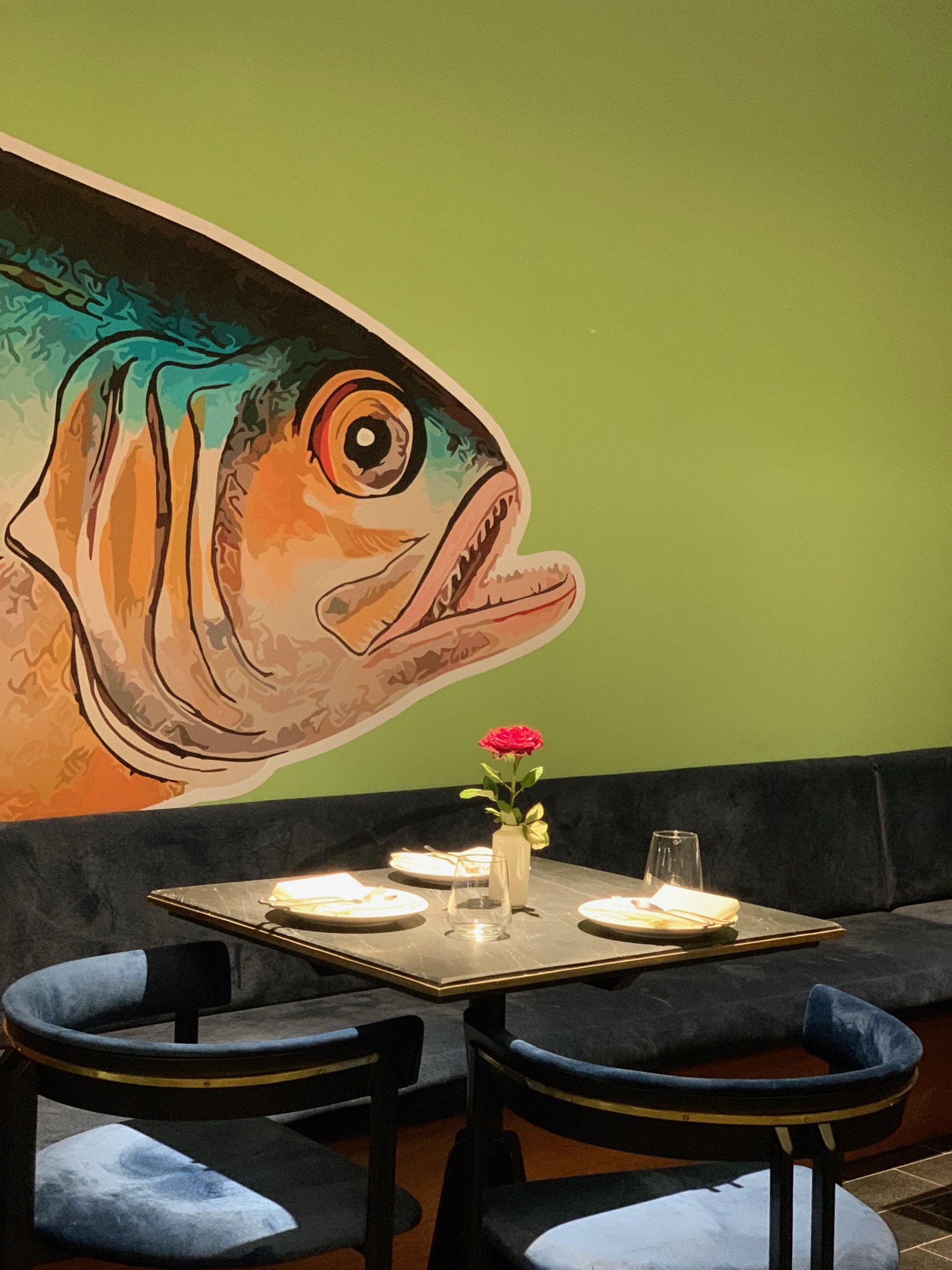
Seating is divided into high and low seats, with tables in the central space placed high, and booths that are built to remind one of the “Cabin” seating of old restaurants in Calcutta- where closed booths for two or three would afford privacy to canoodling couples, or clandestine meetings. Most of the seating is looking towards the kitchen that shows off everything coming onto the tables. The tables are either black or white plain marble as was used in old restaurants all over the country.
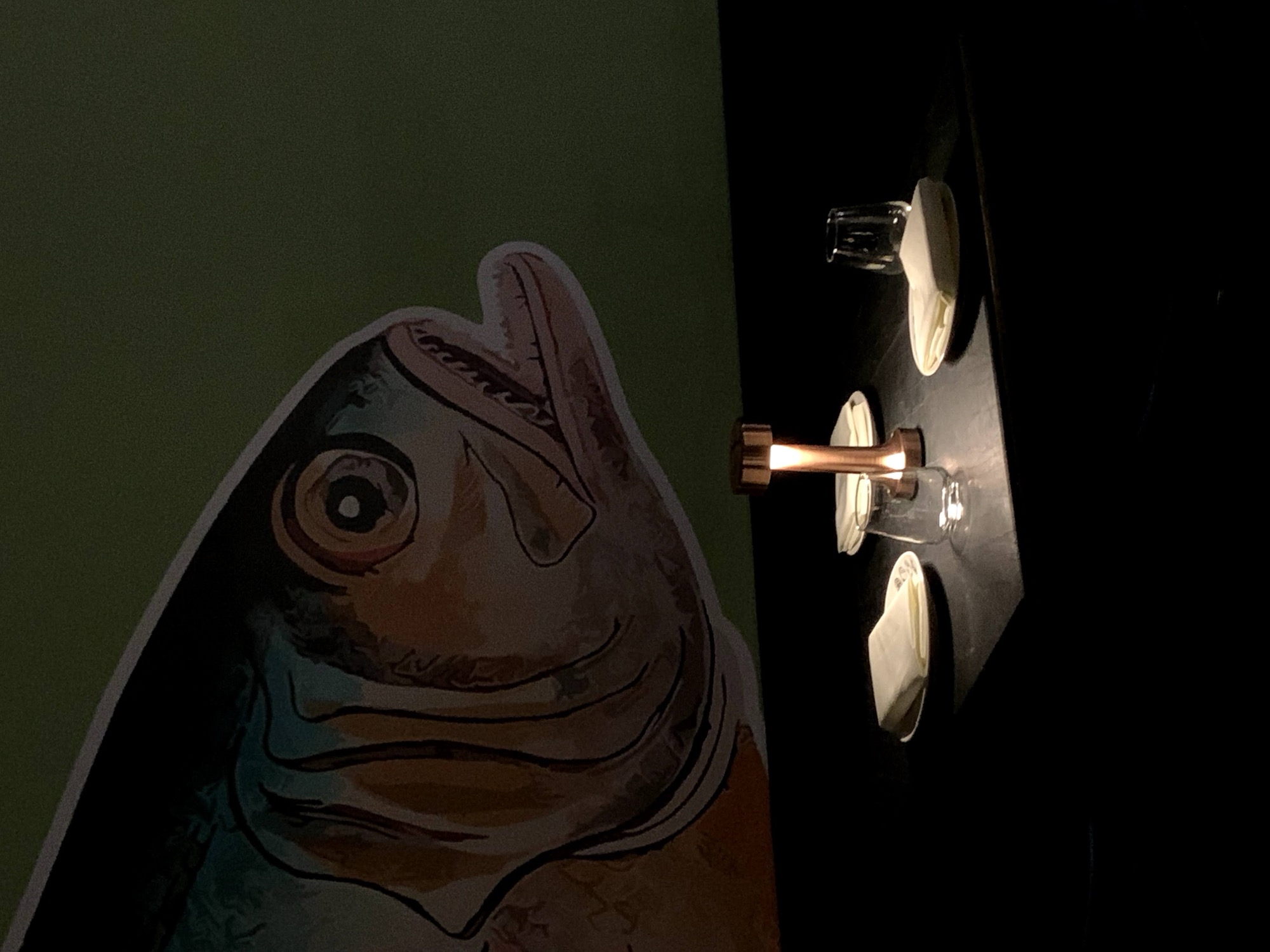
The art on the walls is curated for slightly different experiences when entering from either side. Created by Prateeq Kumar, it attempts to reference the many images one would encounter in a typical restaurant in Tangra, (like a dragon) but relevant to the work the kitchen does here. The photographs was created by Vir Kotak- who looked through Singapore’s chinatown to bring us images that resonated and even connected the space, and one’s experience as a diner. The Studio aligned the images to each space, and the environment one encounters across the restaurant.
With The Tangra Project- the Studio, Vir, Chef Roy, and Anurodh have set out to produce a space unseen in a mall, it does not shine with brilliance to its potential patrons, but it intends to attract with a pensive lustre that speaks of memory, emotion, and generosity. This is how The Tangra Project is built, and will continue to evolve as a space for food, conversation, and conversations about food.
Pranav Naik
Project metrics:
Project Details
- Typology
- Hospitality
- Studio
- Studio Pomegranate